战俘拳王[预告片]
652
2.0
预告片
战俘拳王[预告片]
2.0
更新时间:2025年02月23日
主演:彼得·格洛瓦茨基,Jan Szydlowski,格热戈日·马莱基,马尔钦·博萨克,马尔桑·恰尼克,Marek Kasprzyk,皮特·维特科夫斯基,马里安·杰奇茨,拉法尔·扎维鲁查,卡米尔·谢普特茨基,Marianna Pawlisz,Zbigniew Paterak,Agata Mieniuk,Milosz Kwiecien,Martin Hugh Henley,卢卡斯·斯佐布利克,Marek Kossakowski,Grzegorz Artman,安杰伊·皮耶钦斯基,Ryszard Kluge,Kon
简介:

  1940年,波兰冠军拳王泰迪参与华沙围城保卫战的武装部队,华沙被破,他在逃亡法国途中被捕,成为第一批被送往奥斯威辛集中营的战囚。集中营里朝不保夕,纳粹士兵视为游戏的地下拳击赛,成为泰迪为生存而拼搏的重要战争。然而,一次次激励人心的胜利,却让纳粹长官警觉到囚犯的反抗意识,转而强化管制,眼见冲突逐渐升温,获胜已然成为集中营里残酷的生存之路。
  波兰新锐导演马西耶·巴尔切夫斯基首部剧情长片,将战后被忽视的华沙拳王故事搬上大银幕,背号“77”的囚犯在三年内赢了40战,他的奋斗故事成为奥斯威辛囚犯幸存者的集体记忆。波兰金奖演员彼得.葛洛瓦兹基透过长时间密集的身体训练,精采演绎波兰影史最“痛”的角色。
  “我的爷爷是集中营幸存者,这个故事一直存在我的血脉之中。”――马西耶·巴尔切夫斯基

490
2021
战俘拳王[预告片]
主演:彼得·格洛瓦茨基,Jan Szydlowski,格热戈日·马莱基,马尔钦·博萨克,马尔桑·恰尼克,Marek Kasprzyk,皮特·维特科夫斯基,马里安·杰奇茨,拉法尔·扎维鲁查,卡米尔·谢普特茨基,Marianna Pawlisz,Zbigniew Paterak,Agata Mieniuk,Milosz Kwiecien,Martin Hugh Henley,卢卡斯·斯佐布利克,Marek Kossakowski,Grzegorz Artman,安杰伊·皮耶钦斯基,Ryszard Kluge,Kon
等待方舟
652
1.0
HD中字
等待方舟
1.0
更新时间:2025年02月24日
主演:耶日·斯图尔,克里斯提娜·杨达,卡里娜·谢鲁斯克,马里乌什·德莫霍夫斯基,马雷克·瓦尔切夫斯基,扬·诺维茨基,亨里克·比斯塔,莱昂·涅姆奇克,克兹佐夫·马扎克,斯坦尼斯瓦夫·伊加尔
简介:

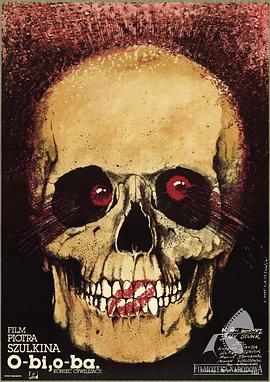
  Set in an underground dungeon inhabited by bundled, ragged human beings, after the nuclear holocaust. The story follows the wanderings of a hero through the situations of survival. People wait for the Ark to arrive and rescue them while their habitat falls apart.
  Delving deep into the dusty and long abandonded vaults of b-cinema in search of lost gems always leaves me with a bittersweet taste. On one hand the discovery of unexpected gems where no one would think them possible is a rewarding experience. On the other hand though it makes one wonder how many of these remarkable low-budget oddities, personal love affairs of directors never quite famous and now all but forgotten, have almost forever slipped from memory?
  n any case what we have here is a little post-apocalyptic gem from Poland that is really better than it has any right to. The dystopian near future of O-BI, O-BA finds a group of survivors of the nuclear war that ravaged the Earth inhabiting an underworld concrete bunker and biding their time as they wait for the mysterious Ark, an air ship of some kind that will come and save them. The Ark proves to be an elaborate hoax, carefully designed to give hope to the malnourished and desperate denizens of the bunker, while in the meantime the dome that separates their miserable existence from the nuclear winter outside is slowly caving in.
  What first striked me about the movie is the design of the bunker and the depiction of the survivors. The survivors are gaunt, filthy and terrible-looking penitents, dressed in rags and aimlessly wandering the neon-lit halls of the bunker like automatons. The bunker is a rundown, seedy place, with bright neon lights peering from all sides like the eyes of malignant beasts.
  On one hand it is a slightly 80's depiction of the dystopian future but the movie never stoops down to MAD MAX cheese. Instead it combines biting political satire with the bleak outlook of a world with no future, black comedy with barbs on apathy, religion and power. The survivors, for example, are fed some kind of flour dropping from a tube that hovers in the air - later on we discover the food supervisor uses books and the Bible itself as filler for this meagre meal. There are many such short symbolic touches, perhaps not life-changing or faith-restoring, yet playful, clever and inspired.
  One thing is for sure; O-BI, O-BA is not your run-of-the-mill sci-fi schlock. It overcomes its modest budget with creativity and has genuine artistic aspirations both from a writing and directing perspective. My opinion is that it should have been filmed in black and white instead of colour though. The director uses atmospheric light and shadow to great effect and it would have registered even better in stark black and white. The blue-green neon on the other hand outstays its welcome after a while. Just a minor gripe in an otherwise solid b-movie with its heart set in all the right places.
  Imagine a less bleak THE ROAD (Cormac McCarthy) being injected with the satire and humour of DR.STRANGELOVE and you're getting there. See it if you can find it.

246
1985
等待方舟
主演:耶日·斯图尔,克里斯提娜·杨达,卡里娜·谢鲁斯克,马里乌什·德莫霍夫斯基,马雷克·瓦尔切夫斯基,扬·诺维茨基,亨里克·比斯塔,莱昂·涅姆奇克,克兹佐夫·马扎克,斯坦尼斯瓦夫·伊加尔
欧洲的某个地方
651
4.0
HD中字
欧洲的某个地方
4.0
更新时间:2025年02月24日
主演:Artúr Somlay,Miklós Gábor,Zsuzsa Bánki
简介:

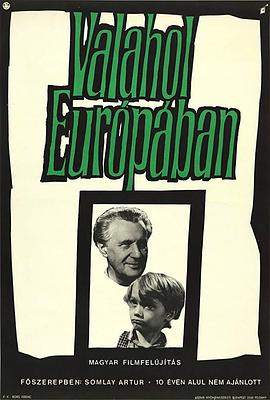
  Somewhere in the remote region, the war ends. In the midst of ruined cities and houses in the streets, in rural hamlets, everywhere where people still live, are children who have lost their homes and parents. Abandoned, hungry, and in rags, defenseless and humiliated, they wander through the world. Hunger drives them. Little streams of orphans merge into a river which rushes forward and submerges everything in its path. The children do not know any feeling; they know only the world of their enemies. They fight, steal, struggle for a mouthful of food, and violence is merely a means to get it. A gang led by Cahoun finds a refuge in an abandoned castle and encounters an old composer who has voluntarily retired into solitude from a world of hatred, treason, and crime. How can they find a common ground, how can they become mutual friends? The castle becomes their hiding place but possibly it will also be their first home which they may organize and must defend. But even for this, the price will be very high.
  To this simple story, the journalist, writer, poet, scriptwriter, movie director, and film theoretician Béla Balázs applied many years of experience. He and the director Géza Radványi created a work which opened a new postwar chapter in Hungarian film. Surprisingly, this film has not lost any of its impact over the years, especially on a profound philosophical level. That is to say, it is not merely a movie about war; it is not important in what location and in what period of time it takes place. It is a story outside of time about the joyless fate of children who pay dearly for the cruel war games of adults.
  At the time it was premiered, the movie was enthusiastically received by the critics. The main roles were taken by streetwise boys of a children's group who created their roles improvisationally in close contact with a few professional actors, and in the children's acting their own fresh experience of war's turmoil appears to be reflected. At the same time, their performance fits admirably into the mosaic of a very complex movie language. Balázs's influence revealed itself, above all, in the introductory sequences: an air raid on an amusement park, seen in a montage of dramatic situations evoking the last spasms of war, where, undoubtedly, we discern the influence of classical Soviet cinematography. Shooting, the boy's escape, the locomotive's wheels, the shadows of soldiers with submachine guns, the sound of a whistle—the images are linked together in abrupt sequences in which varying shots and expressive sharp sounds are emphasized. A perfectly planned screenplay avoided all elements of sentimentality, time-worn stereotypes of wronged children, romanticism and cheap simplification. The authors succeeded in bridging the perilous dramatic abyss of the metamorphosis of a children's community. Their telling of the story (the scene of pillaging, the assault on the castle, etc) independently introduced some neorealist elements which, at that time, were being propagated in Italy by De Sica, Rossellini, and other film artists. The rebukes of contemporary critics, who called attention to "formalism for its own sake" have been forgotten. The masterly art of cameraman Barnabás Hegyi gives vitality to the poetic images. His angle shots of the children, his composition of scenes in the castle interior, are a living document of the times, and underline the atmosphere and the characters of the protagonists. The success of the picture was also enhanced by the musical art of composer Dénes Buday who, in tense situations, inserted the theme of the Marseilaise into the movie's structure, as a motive of community unification, as an expression of friendship and the possibility of understanding.
  Valahol Europaban is the first significant postwar Hungarian film. It originated in a relaxed atmosphere, replete with joy and euphoria, and it includes these elements in order to demonstrate the strength of humanism, tolerance, and friendship. It represents a general condemnation of war anywhere in the world, in any form.

1344
1948
欧洲的某个地方
主演:Artúr Somlay,Miklós Gábor,Zsuzsa Bánki
冠军
651
9.0
HD中字
冠军
9.0
更新时间:2025年02月24日
主演:彼得·格洛瓦茨基,Jan Szydlowski,格热戈日·马莱基,马尔钦·博萨克,马尔桑·恰尼克,Marek Kasprzyk,皮特·维特科夫斯基,马里安·杰奇茨,拉法尔·扎维鲁查,卡米尔·谢普特茨基,Marianna Pawlisz,Zbigniew Paterak,Agata Mieniuk,Milosz Kwiecien,Martin Hugh Henley,卢卡斯·斯佐布利克,Marek Kossakowski,Grzegorz Artman,安杰伊·皮耶钦斯基,Ryszard Kluge,Kon
简介:

  1940年,波兰冠军拳王泰迪参与华沙围城保卫战的武装部队,华沙被破,他在逃亡法国途中被捕,成为第一批被送往奥斯威辛集中营的战囚。集中营里朝不保夕,纳粹士兵视为游戏的地下拳击赛,成为泰迪为生存而拼搏的重要战争。然而,一次次激励人心的胜利,却让纳粹长官警觉到囚犯的反抗意识,转而强化管制,眼见冲突逐渐升温,获胜已然成为集中营里残酷的生存之路。
  波兰新锐导演马西耶·巴尔切夫斯基首部剧情长片,将战后被忽视的华沙拳王故事搬上大银幕,背号“77”的囚犯在三年内赢了40战,他的奋斗故事成为奥斯威辛囚犯幸存者的集体记忆。波兰金奖演员彼得.葛洛瓦兹基透过长时间密集的身体训练,精采演绎波兰影史最“痛”的角色。
  “我的爷爷是集中营幸存者,这个故事一直存在我的血脉之中。”――马西耶·巴尔切夫斯基

1215
2021
冠军
主演:彼得·格洛瓦茨基,Jan Szydlowski,格热戈日·马莱基,马尔钦·博萨克,马尔桑·恰尼克,Marek Kasprzyk,皮特·维特科夫斯基,马里安·杰奇茨,拉法尔·扎维鲁查,卡米尔·谢普特茨基,Marianna Pawlisz,Zbigniew Paterak,Agata Mieniuk,Milosz Kwiecien,Martin Hugh Henley,卢卡斯·斯佐布利克,Marek Kossakowski,Grzegorz Artman,安杰伊·皮耶钦斯基,Ryszard Kluge,Kon
芬妮与亚历山大
650
6.0
HD中字
芬妮与亚历山大
6.0
更新时间:2025年02月24日
主演:克里斯蒂娜·阿道夫森,伯杰·阿斯特,佩妮娜·奥威,克里斯蒂安·阿尔姆格伦,卡尔·比尔奎斯特,阿克塞尔·迪贝里,艾伦·埃德渥,茜芙·埃里克斯,阿娃·弗洛灵,Patricia Gélin,迈丽丝·格兰隆德,Maria Granlund,贝蒂尔·古韦,埃娃·冯·汉诺,索妮娅·赫登布拉特
简介:

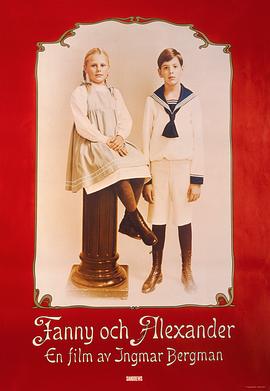
  1907年圣诞,艾柯达家族两代人共享圣诞晚宴,其乐融融。可好景不长,小主人公亚历山大(伯特·格福Bertil Guve饰)和芬妮(妮拉·艾尔温Pernilla Allwin饰)的父亲奥斯卡(艾伦·艾德沃 Allan Edwall饰)在排练《哈姆雷特》时突然中风,弥留之际把苦心经营的大剧院托付给妻子艾米莉(艾娃·弗洛灵 Ewa Froling饰)。一年后艾米莉带着一双儿女改嫁冷酷残暴的青年主教爱德华。爱德华的母亲和姐姐专横刻薄,亚历山大与继父的矛盾日益尖锐,却只能默默忍受。当老祖母海伦娜(古娜·沃根Gunn Wallgren饰)得知此事后,暗中请老友帮忙,终让孩子们重获自由。艾米莉也逃离了主教家,从此一家人再次团聚享受着天伦之乐。
  本片获得第56届奥斯卡最佳摄影、最佳艺术指导、最佳服装设计和最佳外语片等多项大奖。

2202
1982
芬妮与亚历山大
主演:克里斯蒂娜·阿道夫森,伯杰·阿斯特,佩妮娜·奥威,克里斯蒂安·阿尔姆格伦,卡尔·比尔奎斯特,阿克塞尔·迪贝里,艾伦·埃德渥,茜芙·埃里克斯,阿娃·弗洛灵,Patricia Gélin,迈丽丝·格兰隆德,Maria Granlund,贝蒂尔·古韦,埃娃·冯·汉诺,索妮娅·赫登布拉特
首页
电影
电视剧
综艺
动漫
短剧