校园屌丝宫亦飞追求女神林梦怡遭拒绝,花重金求导演朋友老A拍戏帮自己,他和林梦怡饰演男女一号准备日久生情,然后双宿双飞,没想到适得其反,女神越发讨厌自己,这一切被暗恋他的理工屌丝女吕晶晶看在眼里、痛在心里,开始改头换面打扮自己。被林梦怡再次拒绝的宫亦飞伤心的跑到海边散心,遇到神秘小魔女赠予他三颗“爱情后悔药”,服用后变超能男神,林梦怡反过来追自己,两人陷入恋爱。吕晶晶处处对宫亦飞示好,奈何他已心在林梦怡处。这时,吕晶晶无意间发现小魔女的诡计,舍命救了宫亦飞···
幸运是个不起眼的罪犯,一直以来他的幸运日子还算过得去,直到他同意帮一个深陷法律纠纷的朋友照看一笔假钞... 他的朋友两个月来一句交代都没给,于是幸运为了避免麻烦缠身就烧了那些“好玩的钱”,结果却导致火灾被送去了急诊室,在那儿他邂逅了布里奇特,并深深的被其吸引,同时对方也愿意跟他一起出去,他们的约会还算顺利,直到被蒙面人五花大绑蒙塞进车后备箱中,似乎他们想要回从幸运朋友那买的那些假钞,不然幸运就会和他的朋友有相同的下场死掉。 于是幸运的幸运与昔日旧友策划了打劫赌场的方案,与他们搭伙的还有一对夫妇,而这对夫妇竟是帮赌场主人“大先生”收取保护费的手下,想捞点外快。 抢劫计划万事俱备只欠东风:只有少量的现金,而其余的都是债券.....
尼尔·兰德尔(杰拉德·巴特勒 Gerard Butler 饰)和妻子艾比看似美满幸福,生活中相互协调照顾五岁的女儿苏菲。直到一天,一名不速之客莱恩(皮尔斯·布鲁斯南 Pierce Brosnan 饰)声称绑架了他们的女儿,并持枪威胁尼尔夫妇在接下来的24小时中完全受他摆布,不得违抗。为了女儿的安危,尼尔夫妇开始在歹徒的一个又一个要求下亲手将金钱事业一一断送。然而,就在尼尔以为剥削将要结束的时候,噩梦才真正开始,这名歹徒的身份原来牵扯着夫妻二人之间一个深不见底的秘密……
一个家就是一个四季,每个家都有不能说的秘密。追寻身世的姊姊、艰辛求子的妈妈、天兵闯荡的弟弟、试图逆转人生的爸爸,有欢声笑闹,也有哭泣仿徨,直到微光照进幽暗的心房。改编自短片《姊姊》,导演潘客印首部长片以不同家人视角,编织一部动人小品,勾勒平凡台湾乡间家庭横越24年的鲜活画像。蓝苇华、高伊玲、曾敬骅、黄佩琪共组一家四口,串起四段时光的悲喜往事。
电影讲的是女高的4名献血部成员想办法隐藏一名女吸血鬼的故事,唐田演献血部部长。
Isolated on a farm and fighting against his family's decision, Aaron struggles to be heard as he watches his mother willingly die.
Salomé (1923), a silent film directed by Charles Bryant and starring Alla Nazimova, is a film adaptation of the Oscar Wilde play of the same name. The play itself is a loose retelling of the biblical story of King Herod and his execution of John the Baptist (here, as in Wilde's play, called Jokaanan) at the request of his stepdaughter, Salomé, whom he lusts after. Salomé is often called one of the first art films to be made in the U.S.[citation needed] The highly stylized costumes, exaggerated acting (even for the period), minimal sets, and absence of all but the most necessary props make for a screen image much more focused on atmosphere and on conveying a sense of the characters' individual heightened desires than on conventional plot development. Despite the film being only a little over an hour in length and having no real action to speak of, it cost over $350,000 to make. All the sets were constructed indoors to be able to have complete control over the lighting. The film was shot completely in black and white, matching the illustrations done by Aubrey Beardsley in the printed edition of Wilde's play. The costumes, designed by Natacha Rambova, used material only from Maison Lewis of Paris, such as the real silver lamé loincloths worn by the guards. No major studio would be associated with the film, and it was years after its completion before it was released, by a minor independent distributor. It was a complete failure at the time and marked the end of Nazimova's producing career. A longstanding rumor, which seems to have started while the film was still in production, suggests that its cast is comprised entirely of gay and bisexual actors in an homage to Oscar Wilde, as per star and producer Nazimova's demand. It is, of course, impossible to say, but one of the extras in Salomé reported that a number of the cast members—both featured and extras—were indeed gay, but not an unusual percentage of them, and certainly not all of them. What can be said is that Nazimova herself was a lesbian, the two guard characters (who, next to Salomé, have the most screen time) are at least played very stereotypically gay, and several of the female courtiers are men in drag. Salomé was screened in 1989 at the New York International Festival of Lesbian and Gay films and in 1990 at the New York Gay Experimental Film Festival. In 2000, the United States Library of Congress deemed the film "culturally significant" and selected it for preservation in the National Film Registry.
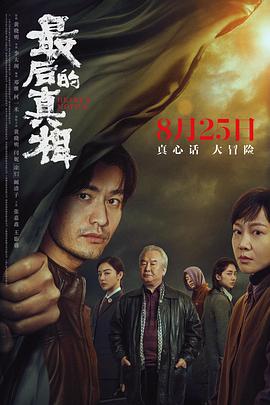
宋隐(宋洋 饰)奉命调查“极乐膏”制贩案件。办案期间,他获得了游侠夜刹、大夫燕云升(陈立农 饰)、药师素娥(姜佩瑶 饰)等人的帮助。他们通过顽强战斗与勇敢牺牲,撕碎了犯罪头目白启年的保护伞,还一方安定。宋隐继续踏上铲奸除恶的漫漫长路。
夜曲讲述了一对年轻夫妇在一夜之间的情感骤变。孩子尚在襁褓,年轻的父亲却是彻头彻尾的窝囊废,整日窝在沙发上写没人要的书稿度日,陪伴他的只有笨重的书本,无尽的沉默以及自我消沉。年轻的妻子则不同,生气活力满满却十分受挫,难以忍受丈夫对失败逆来顺受的性格,,却无法使他振作起来。一晚,妻子辗转城里好玩的酒吧,跳舞调情尽情享受夜晚的美好。一切的一切都掩盖不了她对真切美好幸福生活的向往。她回到家,发现一切都是老样子,一成不变……(豆瓣电影字幕翻译2.0小组)
影片讲述了幼年丧父的捉妖师关灯,靠着自己捉妖驱魔的技法维持生计却意外地卷进了西方恶魔的大阴谋,一场浩劫将血洗恶魔镇。关灯在恶魔镇经历了悲喜离合,他与恶魔镇的羁绊也越来越深。善良正义的关灯决定肩负起恶魔镇的命运,最终携手众妖重新封印了恶魔,使恶魔镇恢复了往日的平静的同时关灯也收获了自己爱情的故事。
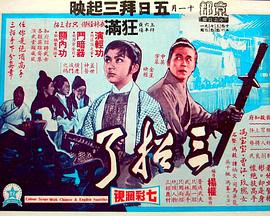
1922年夏,铁路工人黄德发(鲁非 饰) 与江有才送京汉铁路警务处长魏学清的老太爷进城看戏,老太爷蛮横无理与军火车争道。危机中黄德发跳车逃命,江有才和魏老太爷双双辗死在火车轮下。事后魏学清竟以凶手罪名指控黄德发。京汉铁路工人林祥谦(李翔 饰)及律师施洋(金山 饰)地下 党领导老何(吴雪 饰) 和工人代表孙玉亮(张平 饰) 及时发动群众,设法营救了黄德发。1923年1月,在地下党负责人老何的指导下,京汉铁路十六个工会的代表与全国各界代表,经过合法手续到郑州集会,成立总工会。军阀吴佩孚(冯一夫 饰)却下令镇压。林祥谦等施巧计脱离险境。1923年2月4日,在党的领导下,京汉铁路工人举行了全线大罢工,交通中断。在英美帝国主义的支持下,军阀吴佩孚对手无寸铁的工人实施了震惊中外的大屠杀......
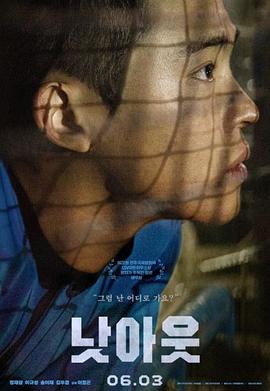
十余年前的西北小镇,刚出狱的二郎(彭于晏 饰)重归故土,面对偏见,面对防备,他不知该如何开启新生活。迫于生计加入打狗队后,二郎拯救了一只流浪黑狗,他也在和黑狗的相处中获得了再次上路的勇气。生命在暗处的绽放更凶猛有力,一人一狗在互相救赎中,拥抱着彼此的新生。
The subject of Danièle Huillet and Jean-Marie Straub’s Der Tod des Empedokles (The Death of Empedocles, 1987) is the Greek pre-Socratic philosopher Empedocles (c. 490 BC – 430 BC), who lived in the Greek colony of Agrigentum in Sicily. His theories are mentioned in several of Plato’s dialogues. He maintained that all matter is made up of four irreducible elements: water, earth, air and fire. A mystic and a poet, he is considered to be the founder of classical rhetoric. He is also thought to be the last Greek philosopher to write in verse; two fragments of his works survive: Katharmoi (Purifications) and Peri Phuseôs (On Nature). An advocate of democracy, he came into conflict with his fellow citizens of Agrigentum and, as result, was banished with his young disciple, Pausanius. When he was asked to return, he preferred to commit suicide by throwing himself into the active volcano at Mount Aetna. The German writer Friedrich Hölderlin wrote two versions of Der Tod des Empedokles in 1798 and 1800, and a final third version in 1820, all three ultimately unfinished. They were conceived as five-act tragedies and all three differ in plot. According to Michael Hamburger, Hölderlin’s English-language translator, the main reason why Hölderlin finished no version of the play must be that he remained too closely identified with Empedocles, at the very period in his life when his own view of the poet as philosopher, prophet and priest – and as tragic hero – was subject to perpetual crisis and re-examination. Huillet-Straub’s The Death of Empedocles is based on Hölderlin’s first version (the longest of the three), whereas Black Sin is based on the third version.